Body Positivity 4
Why Body Positivity Matters Before Puberty

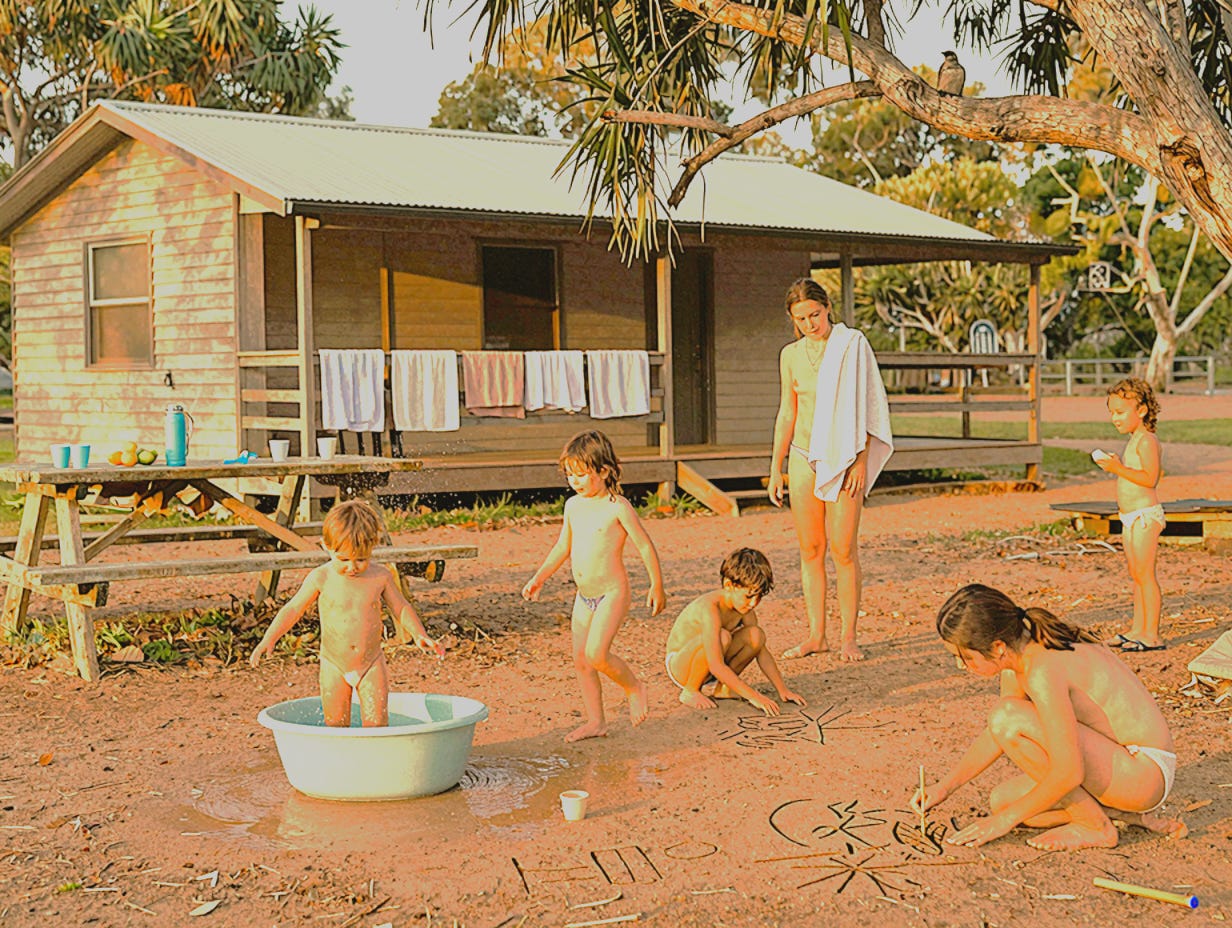
If we hope to raise children who grow into adults at ease in their own skin, we can’t afford to wait until puberty to begin talking about the body. By the time hormones arrive and voices crack and limbs lengthen overnight, much of the emotional groundwork has already been laid. The habits of bracing or breathing, hiding or inhabiting, trusting or monitoring the body are often already in place before children have the language to explain what they feel.
This chapter isn’t written to alarm parents. It’s written to steady them. It exists to name something most families sense but struggle to articulate: children form their understanding of the body long before anyone ever sits them down for “the talk.” Long before modesty is discussed, long before sexuality enters the conversation, children are already learning whether their bodies are safe places to live or problems to manage. For many parents, encountering this truth brings a quiet moment of recognition. Not guilt. Not fear. Just a gentle, clarifying thought: That explains so much.
Children begin learning what it means to have a body from the very beginning of life. Infants don’t learn through instruction; they learn through experience. They learn through the way they are held, the tone of voice used when their needs are met, the expressions that cross a caregiver’s face during feeding, bathing, changing, or soothing. They absorb meaning through the emotional atmosphere that surrounds their physical care. Long before memory forms, impressions settle. Without anyone intending harm, children begin to learn whether their bodies are welcomed or merely tolerated, whether their needs are a joy or an interruption.
As children grow into toddlerhood, this learning continues in small, ordinary moments. They watch how adults respond to their nakedness, how mess and curiosity are handled, whether their physical presence is treated as something good or something inconvenient. A child doesn’t need words to understand whether their body feels at home in the world. Many parents notice that the moments when a child feels most at ease in their own skin — splashing in a paddling pool, running through sprinklers, or wandering freely after a bath — often carry a kind of quiet truth. These aren’t moments of indulgence; they’re moments of unselfconscious presence. By the time they reach school age, most children already carry a theology of the body — not as a belief they could articulate, but as an instinct they live from. They know whether being seen feels safe or risky, whether their body belongs to them or must be managed for others, whether comfort is allowed or quietly suspect. This formation happens gently and quietly. It doesn’t announce itself. It unfolds long before puberty ever arrives.
Shame, when it enters, rarely arrives through explanation. It enters through atmosphere. It slips in through moments that seem insignificant at the time — a flinch when a child runs naked through the house, a sharp intake of breath when a curious question is asked, a hurried command to cover up spoken with tension rather than calm. Sometimes it enters through silence, through the subtle message that certain topics make adults uncomfortable and are therefore best avoided. Children are remarkably sensitive to these cues. They read emotional meaning before they understand language. Tone teaches them what is safe. Flinches teach them that their body might be a problem. Silence teaches them they are on their own with their questions.
Most parents never intend to pass on shame. In truth, they are often responding from their own formation, repeating what they absorbed without ever being given a different framework. Yet the impact is real. Children learn to brace before they learn to breathe. They learn to monitor themselves before they learn to trust. They learn that comfort can be fragile, and that being at ease in their body may not always be welcome.
One mother recalls a moment like this years later with surprising clarity. Her son was three, fresh from the bath on a warm summer afternoon, laughing as he took off down the hallway, bare feet slapping on floorboards. She froze. Not because she believed nudity was wrong, and not because anyone else was present, but because something old stirred in her chest — a sudden sense that this wasn’t okay, even though she couldn’t have explained why. Her voice came out sharper than she meant it to. “Stop. Get dressed. Now.” Her son stopped. His joy faltered. Nothing else happened. No lecture. No punishment. Just a moment. Years later, she recognised what that moment had carried. Not trauma, but orientation. A quiet lesson that said ease in the body was conditional. What unsettled her wasn’t her son’s body, but the old story she had inherited — the one that taught her that ease must be managed. Many adults know this feeling well: the sudden tightening where there could have been trust. When she finally understood this, she didn’t collapse into regret. She felt relief. Because now she could choose differently. And she did.
Much of this confusion is tied to the way modesty has been taught. In Scripture, modesty is about humility, gentleness, and consideration for others. It is relational, not fearful. But many families inherited a fear‑based version of modesty that taught children something else entirely. That version quietly suggests that the body is dangerous, that the body is responsible for other people’s thoughts, that holiness requires hiding, and that comfort should be viewed with suspicion. Over time, this does not produce wisdom or discernment. It produces anxiety.
Children shaped by fear‑based modesty often grow into teenagers who distrust their instincts, who feel responsible for managing other people’s reactions, who carry unnecessary shame about ordinary development, and who struggle to name discomfort clearly. Instead of asking for help, they learn to hide. Instead of learning discernment, they learn vigilance. Fear‑based modesty does not protect children. It burdens them. And in many cases, it leaves them more vulnerable rather than less.
There is a moment every parent reaches — sometimes early, sometimes late — when they realise their child is not simply learning from them, but learning them. Children don’t copy our words first. They copy our posture. They absorb the way we inhabit our own skin long before they understand why we do it. And that realisation can land with a kind of holy weight.
Because if that’s true — and it is — then every small act of ease in a parent becomes a seed of freedom in a child.
A father who doesn’t flinch at his own reflection teaches his son something he may never say out loud: You don’t have to fight yourself to be loved.
A mother who doesn’t apologise for taking up space teaches her daughter: Your presence is not a problem to solve.
A parent who breathes instead of bracing teaches a child: Your body is not the enemy. It’s home.
These lessons don’t arrive through lectures. They arrive through atmosphere. Through the way a parent stands at the sink. Through the way they towel off after a shower. Through the way they respond to a child’s curiosity, or mess, or unselfconscious joy. Children read these moments like Scripture — not as rules, but as revelation.
And here is the part that often catches parents off guard: your healing becomes their inheritance.
Not your perfection.
Not your certainty.
Not your mastery.
Your healing.
Every time you soften where you once tightened…
every time you choose calm where fear used to live…
every time you let your shoulders drop instead of snapping to attention…
you are preaching a sermon your child will remember long after they forget every memory verse.
Children raised in homes where the body is treated with gentleness grow up with a different kind of strength. Not bravado. Not defensiveness. Something quieter. Something steadier. They grow up knowing what so many adults are only now discovering — that the body is not a liability to manage, but a place where God meets us.
And that is why this matters before puberty. Because by the time a child reaches adolescence, they are not beginning their story with the body. They are continuing it. And the story they carry into those years — whether marked by fear or by ease — will shape everything that follows.
Healthy body positivity, by contrast, is not indulgence or permissiveness. It is safeguarding at its most foundational level. Children who feel at home in their bodies are more likely to speak up when something feels wrong. They are less easily manipulated through shame. They are better able to set boundaries and to respect the boundaries of others. They carry a steadier sense of worth that does not collapse under peer pressure. They are more confident naming discomfort and seeking support when they need it.
Homes shaped by calm, grounded body acceptance tend to be places where questions are welcomed rather than feared, where curiosity is treated as normal, where privacy is respected without panic, and where boundaries are taught without shame. In such homes, the body is not elevated or ignored. It is treated as ordinary and good. In homes where bodies are treated as ordinary and unthreatening, children often move with a kind of natural ease — not boldness, not exhibition, just the quiet confidence of being unbraced in their own skin. That atmosphere becomes its own kind of safety. This is emotional resilience in its earliest form. This is protection before instruction. This is wisdom that settles into the body long before it ever needs to be defended with words.
When parents begin to recognise how early body theology forms, many experience a moment of regret. It is usually brief, and it is often followed by something gentler: relief. Because the truth is this — you did not choose the shame you inherited, and your children do not have to inherit it from you. Formation is ongoing. Repair is always possible.
Parents can begin again. They can soften their tone. They can slow their reactions. They can breathe where they once braced. They can create homes where the body is not a source of fear, but a place of trust. That shift does not require perfection. It requires presence. It requires steadiness. It requires the courage to remain calm where fear once lived.
And that quiet, faithful shift — barely visible to the outside world — can change the entire trajectory of a child’s life. Not through control. Not through silence. But through trust. And that, too, is a deeply Christian act.
At heart, this way of thinking about children and their bodies grows straight out of the Christian story. In creation, God calls the human body good from the very beginning. In the life of Jesus Christ, God chooses to live fully in a human body — growing, learning, touching, resting, and being present in ordinary physical life. And in everyday faith, following God is not about escaping the body, but learning to live well within it. When children grow up feeling safe and comfortable in their bodies, they are being shaped in a faith that reflects God’s goodness, closeness, and care — not fear or shame.
And perhaps this is why the simplest moments of bodily ease matter more than we realise — the unhurried ones where no one is bracing, hiding, or rushing a child out of their own skin. These aren’t grand statements. They’re small, ordinary reminders that the body is allowed to be a place of comfort rather than caution. When a home makes room for that kind of ease, something in a child settles. They learn, quietly and without fanfare, that being at home in their body is not indulgent or risky, but good. And in that gentle atmosphere, the seeds of lifelong freedom begin to take root.
Another thoughtful post well said. Makes me think back to a lot of times and how I reacted to kids doing the innocent silly things. Tks
I was so lucky to grow up in a household where nudity was ok. My sister and I often played without clothes even when people were visiting. Some of my friends got naked when they came round to play. That contrasts heavily with my next door but one neighbour who have 4 children under school age. The mother screams a lot at her children. The most screaming is telling Noah to put his pants, clothes, nappy back on. These children won't enjoy anything like the body comfort I had as a child and still enjoy today