Bare Faith 4
What Christian Naturism Is (and Isn't)

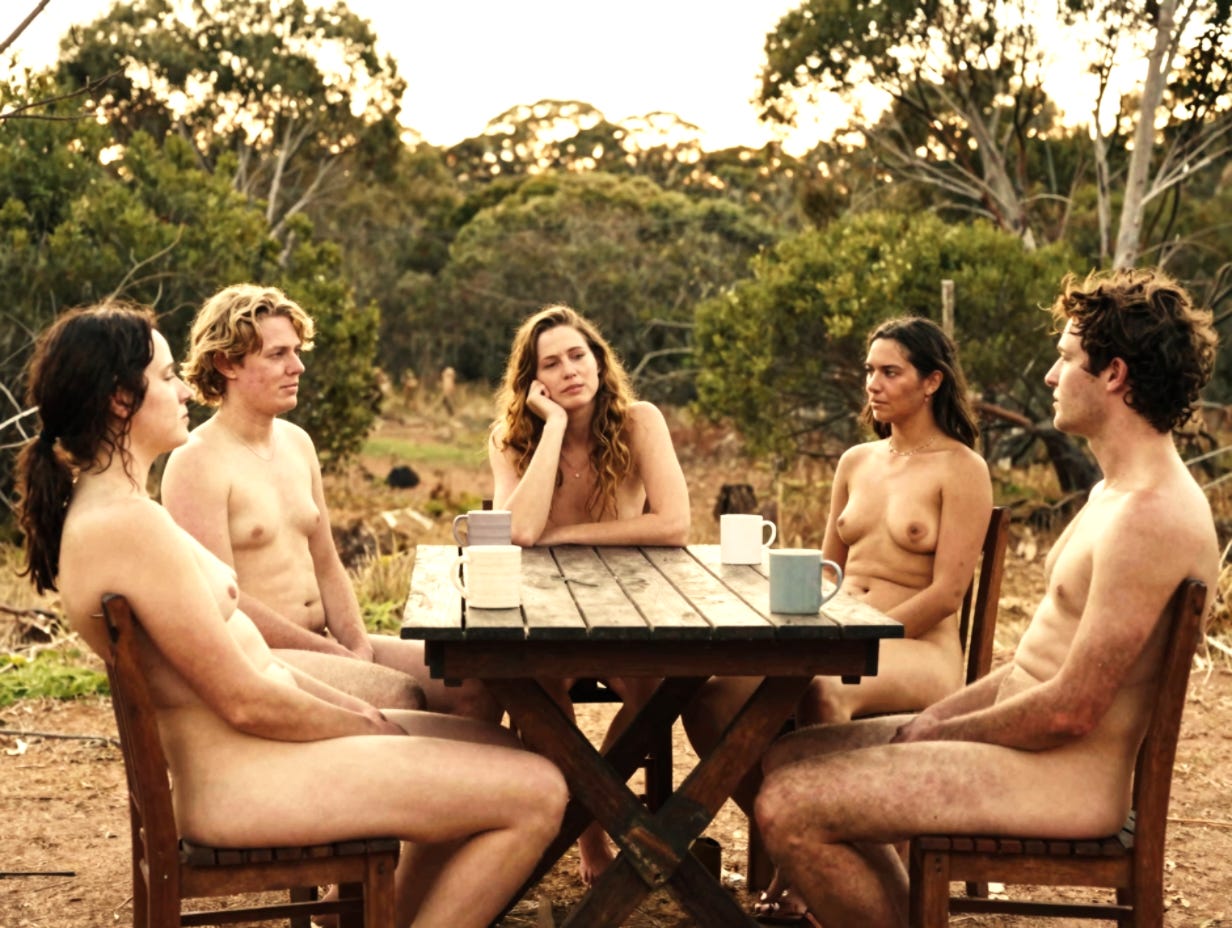
Every now and then, you’ve got to pause the conversation, lean back in your chair, and clear the air. Not with a lecture. Not with a rant. Just with the kind of plain talk you’d use when someone asks how to mend a fence or sharpen a blade. Calm. Practical. Straightforward. No drama.
That’s where we are now. Because a lot of the confusion around Christian Naturism comes from people talking past one another, mixing ideas that don’t belong together, and reacting to the pictures in their heads instead of paying attention to how folks actually live around the table. So before we go any further, it helps to say a few things plainly.
Nudity isn’t the same thing as sexuality. And modesty has never been about fabric alone — it’s about character. Once you separate those ideas, most of the fog starts to lift.
For many people, the word Naturism triggers assumptions straight away. They hear nudity and think sexuality. They hear bodies and imagine a loss of boundaries. They picture something wild, unsafe, or irresponsible. But that’s not what we’re talking about here. Not even close.
What we’re talking about is honesty. We’re talking about clarity. We’re talking about living in the bodies God gave us without panic, performance, or pretence. And mate, once you clear away the misunderstandings, the whole thing becomes surprisingly simple.
Christian Naturism is a way some Christians choose to live that treats non-sexual nudity as a natural part of how God made us. Christian naturists reckon God made the body good from the start, not something to be ashamed of, and that being bare among others can help us honour God’s creation, stand in deeper unity with one another, and live a more grounded, embodied faith. They point to early Christian practices, the stories of creation and incarnation, and the simple belief that a naked human body — as God made it — is good.
It’s worth starting with what Christian Naturism is not, because the myths tend to run ahead of the reality. Christian Naturism isn’t sexual. It doesn’t eroticise the body or turn skin into spectacle. It doesn’t invite objectification or blur the line between nudity and desire. In fact, it often does the opposite. By removing secrecy and taboo, it takes away the charge that turns bodies into forbidden fruit in the first place.
Christian Naturism also isn’t boundaryless. It doesn’t throw wisdom out the window or pretend that safety, consent, and discernment don’t matter. It doesn’t ignore comfort levels, especially for children. It doesn’t dismiss guidance or accountability. There’s nothing chaotic or careless about it when it’s practised well. It’s not rebellion for rebellion’s sake, and it’s certainly not a free-for-all.
Like any faithful practice, Christian Naturism requires discernment, context, and ongoing conversation — not rigid rules or one-size-fits-all answers.
Nor is Christian Naturism a rejection of modesty. If anything, it’s a return to the kind of modesty God intended from the start. Biblically speaking, modesty has far more to do with humility, kindness, self-control, and how we relate to one another than with how much fabric we’re wearing. It’s about the posture of the heart, not the hemline.
And Christian Naturism isn’t some shortcut to holiness. It doesn’t make you more spiritual, more enlightened, or better than anyone else. It doesn’t replace discipleship, prayer, community, or the slow work of formation. It’s simply one way of choosing to live honestly in the body God looked at and called “very good”. Once those myths get cleared off the table, what remains is simple, grounded, and not nearly as frightening as people imagine.
At its heart, Christian Naturism is about clarity. It refuses to let silence do the teaching. It names things plainly and calmly, without embarrassment or drama. It treats the body as part of discipleship, not as a distraction from it. For kids, especially, that clarity matters more than we often realise.
It’s also about honesty. It allows children to grow up knowing their bodies aren’t mistakes or problems anyone has to fix. It gives adults permission to heal from the shame they inherited without even realising it. It opens the door for families to talk — really talk — without flinching or shutting down.
Christian Naturism is also deeply connected to stewardship. It teaches respect for your own body and for the bodies of others. It reinforces boundaries rather than erasing them. It places consent, dignity, and care at the centre of how we live together. Every person you meet stands before you as an image bearer, not someone to reduce or objectify.
There’s a quiet peace that comes with that kind of clarity. Panic settles down. Tension eases. The knots begin to loosen. People start to breathe again — sometimes for the first time in years. Being human stops feeling like something you have to apologise for.
In everyday life, this usually looks far less dramatic than people expect. At home, it might simply mean children seeing ordinary bodies without panic, questions being answered calmly, and privacy being taught as wisdom rather than embarrassment. In naturist spaces like clubs or beaches, it looks like clear rules, shared expectations, and a strong culture of respect — families minding their own business, adults modelling boundaries, and kids free to just be kids. In mixed or public settings, it means making thoughtful choices, using clothing when appropriate, and helping children understand that different spaces call for different expressions — without turning any of that into shame or secrecy.
And it’s never a solo pursuit. Christian Naturism is about community. It’s about living truthfully with others, not hiding away in isolation. It grows in spaces where people practise trust, gentleness, and mutual honour day by day. There’s nothing flashy or extreme about it. It’s as ordinary as sunlight on skin and as steady as good timber that seasons properly over time. For families, this clarity isn’t theoretical — it shapes the atmosphere children grow up breathing every day.
All of this matters because shame has always thrived in silence. When we don’t talk about bodies, children fill in the gaps with whatever story feels safest — and it’s rarely a kind one. Adults do the same. Silence becomes a teacher, and it teaches fear far more effectively than anyone intends.
Health, on the other hand, grows in clarity. When we name things plainly, shame loses its grip. When we speak honestly, fear has fewer places to hide. When we stop treating the body as the enemy of faith and bring it back where it belongs, something in people settles right down.
Christian Naturism isn’t about shock value or pushing boundaries for the sake of it. It’s about healing. It’s about truth. It’s about digging up a simple, old truth fear kept shoving under — the truth that God didn’t get it wrong when He made us human.
And once you see that — really see it — the whole conversation changes.
another good post tks
I really like how you point out living bare is not shameful. I wish more people could just understand naturism as a free way of life. That there is nothing shameful about living clothes free as much as possible. Even if they don't want to participate themselves.